By the temple steward · 2026-09-02 (revised 2026-10-27)
A note on quiet work, one practice, and what the month made.
The short version
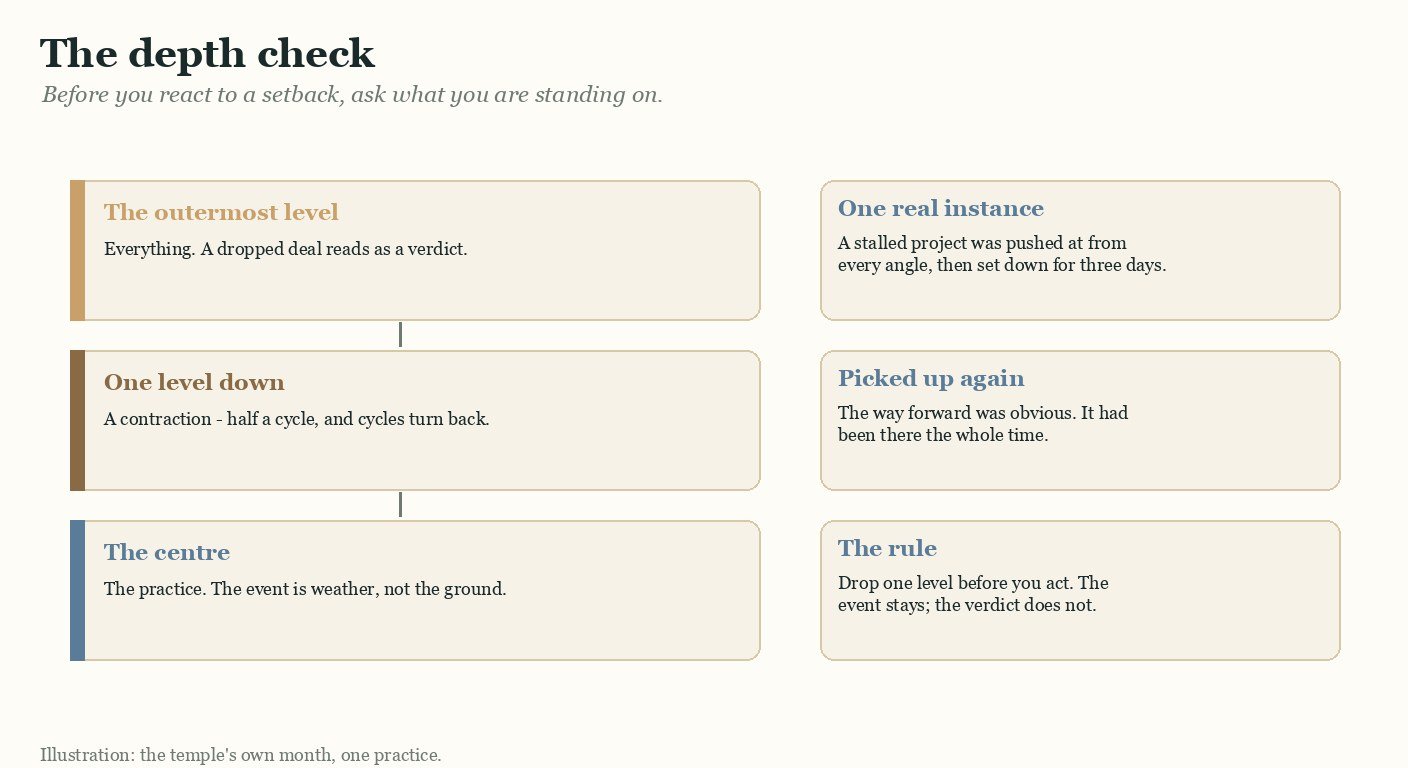
September’s work turned on one question: what is the Dao, read two ways? The month published One Dao, Two Readings and opened the terms behind it — ziran, wuji, taiji — and the practice was the depth check: before you react to a setback, ask what you are standing on. From the outermost level a dropped deal reads as a verdict; one level down it is a contraction, and cycles turn back.
September turned the garden toward harvest — and turned this site toward a quieter question: what is the Dao, read two ways? The month’s work landed there. We published One Dao, Two Readings — order and awareness, and where they meet — and added the terms behind it to the glossary: ziran, wuji, taiji, and a fuller reading of the character 道 itself. The Wu Wei practice page gained its three questions for when the forcing creeps back.
The practice this month — the depth check. Before you react to a setback, ask: what am I standing on? If the answer is “everything,” you are on the outermost level, where a dropped deal reads as a verdict. Drop one level and the same event becomes a contraction — half a cycle, and cycles turn back. One real instance from the temple’s practice: a stalled project was pushed at from every angle, then set down for three days while the garden was worked. When it was picked up again, the way forward was obvious — it had been there the whole time.
How to run it
- Stop before reacting. The check only works before the reply, the push, the decision.
- Ask what you are standing on. If the honest answer is “everything”, you are on the outermost level.
- Drop one level. The same setback becomes a contraction — half a cycle, and cycles turn back.
- Set it down for a short while. Three days worked here, with the garden as the other work.
- Pick it up again and ask what is actually required. Usually less than the first reaction wanted.
Where it fails
- Reacting from the outermost level. A dropped deal is a dropped deal, not a verdict on you.
- Calling the pause avoidance. Three days, then pick it up. Indefinite is not a practice.
- Dropping levels to avoid a cost that is genuinely yours. The check is for perspective, not for escape.
- Doing the check once and expecting it to stick. It is a practice for the next setback, and the one after.
- Confusing the map with the work. Naming the levels is nothing until you drop one before acting.
Housekeeping. Every blog post now carries machine-readable Article schema, and the FAQ page lists all twenty of its questions for search engines and AI answers alike. Behind the scenes, the temple’s publishing moved to encrypted connections and a cleaner history.
Quiet comes first; everything else moves after.
— The temple steward